
Introduction
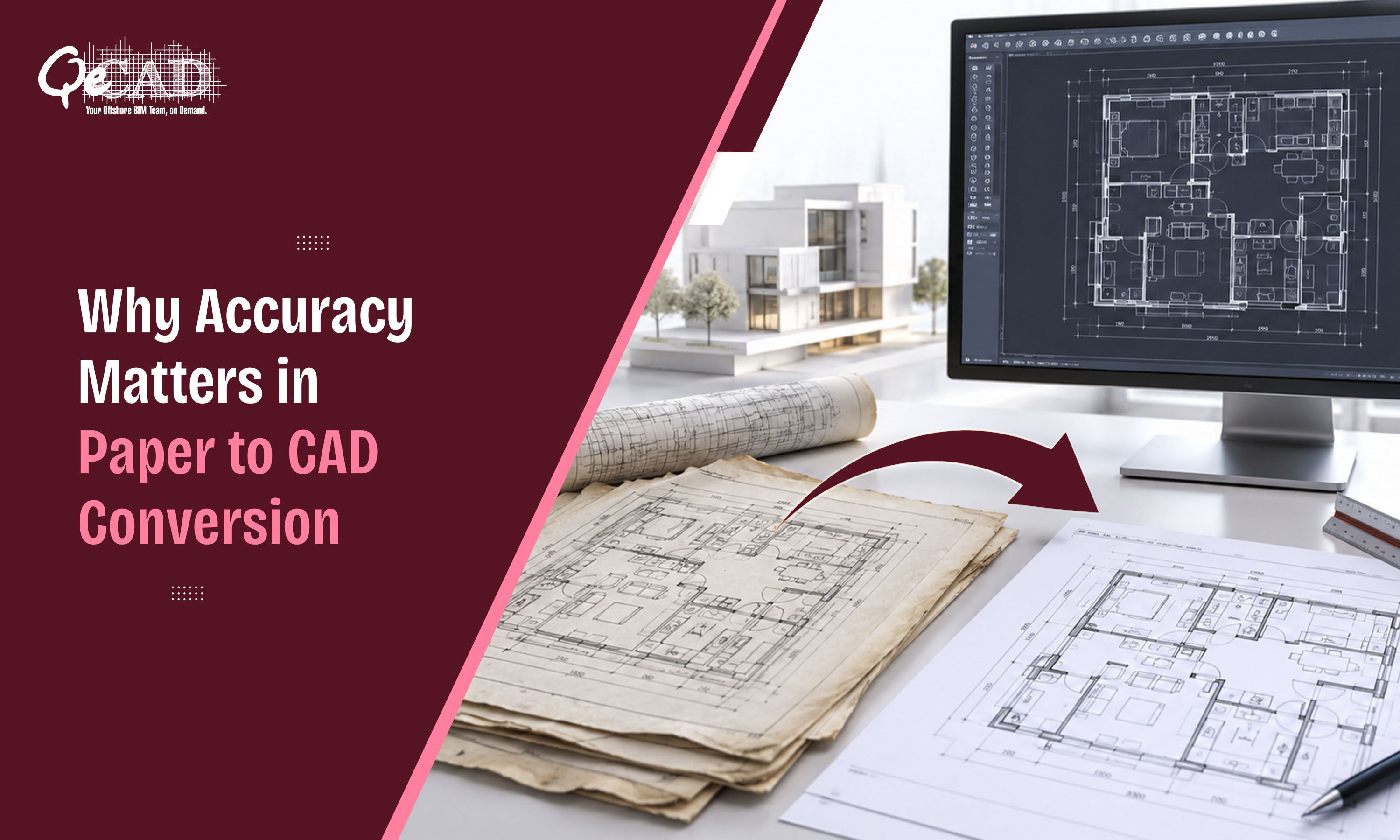
Despite the rapid adoption of digital design technologies, millions of engineering drawings, architectural plans, manufacturing blueprints and infrastructure records still exist only on paper. Converting these legacy documents into editable CAD files is essential for improving accessibility, collaboration, design updates and long-term asset management.
However, paper-to-digital conversion is not simply about tracing lines. Aging documents, inconsistent scales, faded annotations and manual drafting variations often introduces significant accuracy challenges that can affect the downstream design and construction decisions. Professional CAD Drawing Services combine advanced digitization workflows with engineering expertise to ensure legacy drawings become reliable digital assets rather than sources of costly errors.
Fact: Studies across the AEC industry estimate that poor-quality project information and documentation issues account for a substantial portion of project rework, with global rework costs representing up to 5–10% of total construction costs, highlighting the importance of accurate digital documentation.
Conclusion
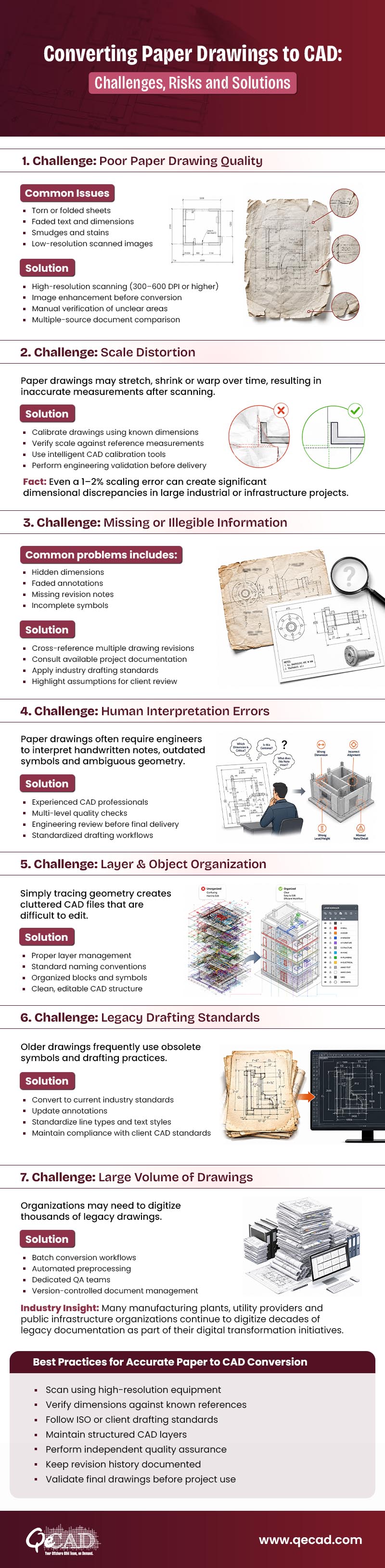
Accurate Paper to CAD conversion requires far more than digitizing old drawings—it demands engineering validation, standardized drafting practices and rigorous quality control. By addressing challenges such as scale distortion, poor document quality, missing information and inconsistent drafting standards, organizations can create dependable CAD files that support renovation, manufacturing, facility management and future design modifications. Investing in precise conversion today minimizes downstream errors, reduces costly rework and provides a reliable digital foundation for modern engineering and construction workflows.
Key Statistic: According to industry research, improving information quality and reducing documentation errors can significantly lower project rework, which is estimated to account for 5–10% of total construction costs across the global construction industry.